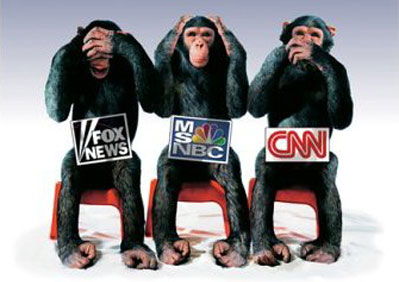
We live in a country were we are free to question; free to question different religious beliefs, free to question the governments decisions, free to question ideologies and simply free to ask why. However, just because we are able and free to question, that does not mean that all of us do. Many people assume others now what is best, that what they hear from the media is true, that people in high levels of power know exactly what they are doing. Because many of us do not necessarily sit down and think about every issue in the world and question why it is happening or question ideologies, we need people like authors, speakers, artists, musicians, historians and other people to draw to our attention to different point of views on issues and different ways of seeing everyday ideologies.
An artist sees, reads, creates and translates. They illustrate their thoughts, emotions, and opinions through their artwork. Art creates emotion in every viewer; it can cause sadness, happiness, excitement, puzzlement and awareness. When we connect with a piece of artwork, we remember it forever, we question why we connected with it, or why we felt the emotions, we did? It is because of these questions that are raised when we see artwork, that artwork can be used to alter political thinking or effect political change.
“Speech for the Last Day in America” had many examples of how “artistic mediation” can effect political change and alter political thinking. Through out the speech we saw different events such as 911 and Hurricane Katrina interrupted in different ways. Images and narrative were used to display events or certain people in specific ways. For example, the narrative and images in the presentation portrayed police officers as overbearing and controlling. By portraying police officers in this way, it causes people to question how police officers really are. One example that I loved in the presentation was the grave of America with television screens of news channels and the media on top of the grave. The image offered many meanings and called upon the viewer to question, why are their TV monitors and why would someone display the grave of American in this way? It called to attention how much of an impact the media has on the world.
People respond to things that cause emotion, and artists have the talent of portraying their ideas and ideas of others through artwork, that connects with people. It is because of an artist’s ability to connect with its audience that they can effect political change and alter political thinking.
Friday, April 4, 2008
"Artistic Mediation"
Saturday, March 29, 2008
Friday, March 21, 2008
Political Advertisment Idea


Tuesday, March 18, 2008
MidTerm Assignment 2
Unscripting the Political Process
We live in a political world that is very scripted. The President, Congressmen, Senators, media, corporations and government officials are very careful with what they say to the people. Political figures, as well as the corporate world, give “safe” answers to avoid any negative publicity and to appeal to the outside world. Advancements in technology, however, have made it possible to unscript the political process and shed light on some truth in the political arena.
Steve Dietz and Max Perry spoke of YouTube as a source to unscript the political process as well as spark debates and raise awareness about political issues. Groups such as the “Yes Men” and “Billionaires for Bush” raise awareness on specific political issues and do this by often times using satire. For example, the “Yes Men” create fake websites that are spoofs of other organizations; they then accept invitations that are meant for the organizations and show up at events, in which they talk about what they believe the organizations’ “true identities” are. Videos of the “Yes Men” in action are then put on YouTube for everyone to view and to cause discussion about the organizations they impersonate.
In Steve Dietz’s lecture, he spoke of Harun Farocki’s Eye Machine, 2001 which is a fast-paced montage on the theme of surveillance in the era of “smart” technology. The piece draws on the ideas of: robots blindly performing industrial tasks; flaws in production being tracked by computers in a steel foundry; airport layouts being analyzed onscreen to monitor flow and security and a missile with a mounted “suicide camera” giving a kamikaze view of a bridge’s destruction. The ideas that he emphasizes in his video art are not far fetched and they actually raise discussion and awareness of what machines are truly capable of these days.
Artists like the “Yes Men” and Harun Farocki alter political thinking through their works of art. They might not change everyone’s opinion, but their works of art raise awareness of the scripted political world we live in. Through artists works we can see a different opinion; which causes us to open our minds and not blindly believe everything the media and politicians say.
Midterm Assignment 1
YouTube differs from broadcast television in many ways. Unlike broadcast television, which the corporate world controls, the people are in control of YouTube. YouTube represents the views and interests of a person by allowing each person to post their own video to the website. For example, “Kitchen Diaries” is a video on YouTube in which a person takes the idea of a cooking show and adds a musical interpretation, which creates his own work of art.
Another way broadcast television differs from YouTube are the filters used. Producers and directors filter broadcast television and with YouTube, the person who posts the video decides the programming of the video. Censorship is another way in which YouTube differs from broadcast television. YouTube is self-censoring and relies on its viewers to report any inappropriate content unlike broadcast television, which relies on the Federal Communications Commission to censor television programs.
YouTube has had a heavy impact on the creation and distribution of video art. YouTube has allowed video art to become more interactive; people/viewers can change the plot of a videos story and leave comments. For example, in “Lonelygirl 15” viewers are able to determine the plot of the video by voting and leaving comments. Every video posted on YouTube allows comments to be made, which can dictate how often a video is viewed and offers all viewers to offer feedback. YouTube has created a way for anyone to become famous. Although YouTube does not guarantee that every person who posts a video will become popular, it offers a chance for people other than famous directors or artists to expose their video art to the world. YouTube video clips are short-time clips, which allow viewers to watch them often and whenever they can. No longer do people have to tune into a show at a specific time, but they can watch a show’s highlights on YouTube at anytime. For example, if someone missed one performer of American Idol on a Tuesday night, they can watch that segment of the show on YouTube.
YouTube’s broad distribution of video art has brought about many social and political ramifications. YouTube is a place that allows people to show the world their opinions, talents, imaginations and memories through videos. Not only can YouTube make a video spread the globe, but it can also be used to promote or discourage a political cause. YouTube serves as another avenue of communication for the people to express their own opinions and forces the media, government and the world to hear what “the people” are saying. For example, “Yes We Can-Barack Obama Music Video” is a video on YouTube that incorporates Barack’s campaign speeches with lyrics, which creates a song sung by famous artists with Barack’s voice in the background. The video not only creates a powerful and compelling message, but it encourages voters to support Barack for president as well.

Monday, February 25, 2008
Monday, February 11, 2008
Why does art have no limits? And how has it become limitless?
John Cage says, "When our time was given to physical labor, we needed a stiff upper lip and backbone. Now that we're changing our minds, intent on things invisible, inaudible, we have other spineless virtues: flexibility, fluency. Dreams, daily events, everything gets to and through us....Art conforms to no rules."
Today our labors are more mental and less physical. Many people today do not spend their days laboring in fields, but working in offices brainstorming, dreaming, inventing and strategising. We are encouraged to dream big, to be "flexible" and "well-rounded". We are taught to push boundaries and to go beyond the ordinary; so why wouldn't we carry these same principles over to the art world. We are taught life has no limits, so why would art have limits either. So why can't an audience become the artist, and why can't the artist become the audience? I believe there are no limits to art. I believe that the idea of limitless art has come from our cultural experiences and the way we are encouraged by society to push limits in order to reach a higher level of success.